Not all clinics in Japan require you to have your test results translated into Japanese. Whether or not translation is necessary depends on the specific clinic and the type of report you have.
At ARIEL BUST CLINIC, you can consult in English; however, we do not have a specific policy regarding English-language reports. Before arranging a translation, please contact us through our contact form to clarify any requirements.
Written by
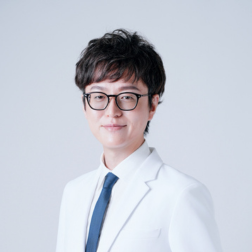
Noriyuki Ishizuka, MD
Director, ARIEL.BUST.CLINIC
Dr. Noriyuki Ishizuka is a board-certified plastic surgeon in Nagoya, Japan, specializing in breast augmentation (including fat transfer) and liposuction. In his articles, he explains the benefits, limitations, and risks of each option from a surgeon’s point of view.
Board-certified plastic surgeon, Japan Society of Plastic and Reconstructive Surgery (JSPRS) / Board-certified aesthetic surgeon, Japan Society of Aesthetic Plastic Surgery (JSAPS)
Whether breast augmentation test results need a Japanese translation
Some practices accept clear English-language reports, while others ask for a Japanese copy beside the original. Ask which rule applies before you book your travel.
The records that usually need review include blood test results, breast imaging reports, and any notes from a doctor who cleared you for surgery. You will not necessarily need a Japanese version of every page, but each page should be readable without extra explanation.
What this clinic offers in English
At ARIEL.BUST.CLINIC, we provide consultations in English, so you do not need to bring an interpreter. However, you are welcome to bring a friend or family member if that makes communication easier.
That still leaves the paperwork question open. Our English website does not state whether test reports must be translated into Japanese. Confirm this with us before you send documents or pay for outside help.
How to prepare breast augmentation test results for review
Before translation, a clear and complete original report makes reviewing the clinic easier. Hospital records often become difficult to read when pages are out of order, units are missing, or reference ranges are unclear.
Start with the original document
Before arranging a separate translation, request an English-language version from your doctor or laboratory. When an official English report is available, it is often easier to review because the medical terms and numbers remain in the same layout.
Check the details a translator would need
If the clinic asks for more information, you need to submit a document that includes the following.
- Item names printed in English or in a glossary from the laboratory
- Values and units shown next to each result
- Reference ranges from the testing laboratory
- Collection date and facility name on every page
- Your name and date of birth on each report
Keep the original even when you also. It gives the doctor a chance to check numbers that may have been mistyped or left out.
When automatic translation falls short
Automatic translation can transform a document into a draft that is easier to read, but it cannot reliably replace the original content.
In the case of medical documents, the primary concern is not so much whether each sentence sounds natural, but whether any numbers or instructions have been altered during translation.
Accuracy depends on the language
Translation quality is not the same from one language to another. In a 2021 study of emergency department instructions, accuracy ranged from 94% in the strongest language to 55% in the lowest.1
A later study of 26 languages found 95% accuracy overall, but five languages fell below 90%.2 The authors also said it was hard to know in advance which language would perform well.
One document is more than one sentence
Even high sentence-level accuracy can hide a missing value or an extra word when the whole page is treated together. In a 2026 study of patient instructions, the share of instruction sets with at least one error ranged from 16% to 66% by language.3
Medication directions need extra attention
Medication names matter, but instructions for taking a drug can be the part that suffers most in a translation.
Translated drug information may describe effects and side effects clearly while leaving the directions for when and how to take the medicine less exact. Before you travel, ask us how to prepare your medication list.
What to confirm before your breast augmentation trip
Your next step is to ask us what we need from your records.
A systematic review of 29 studies covering roughly 280,000 surgical patients found that limited English was associated with lower access to surgery in four of six studies and more delays in three of four studies that measured it.4 The review did not show that language caused those differences.
In a study of 72 overseas patients receiving cancer care at one Japanese hospital, incomplete referral documents and language differences were common problems before treatment.5
Although that study involved cancer care rather than breast augmentation, it shows why you need to complete readable records before you leave home.
Transferring medical records is essential after surgery. Patient safety representatives in Canada have identified gaps in medical record transfers as a significant concern for individuals who travel for care. To facilitate this process, it is helpful to keep both the original records and a written summary together.
At our clinic in Nagoya, Japan, consultations are available in English, and you can contact us by email or on our official LINE before you come. After surgery, you can reach us the same way, and we will give you your surgical records.
Frequently asked questions
- Do I have to translate my blood test results into Japanese?
-
Not automatically. The rule depends on the clinic, and we have not published a general requirement on our English site. Ask through the contact form before paying for a translation, and bring the original report with you.
- Will the clinic accept a machine translation?
-
A machine translation may help you read the report, but it is not the same as a careful review of the medical details. Send the original first and ask what we prefer.
- What if my report is already in English?
-
An English report may be enough, but confirm that before you travel. Ask us whether the report format is acceptable.
- Should I still bring the original documents to Nagoya?
-
Yes. The original report carries the laboratory name, units, reference ranges, and date. A translation should support that record rather than replace it.
References
1. Taira, B. R., Kreger, V., Orue, A., & Diamond, L. C. (2021). A Pragmatic Assessment of Google Translate for Emergency Department Instructions. Journal of General Internal Medicine, 36(11), 3361-3365. https://doi.org/10.1007/s11606-021-06666-z
2. Carreras Tartak, J. A., Haimovich, A. D., Thomas, C. E., Bivens Moore, E., Slebonick, A., Haque, N., & Thomas, S. H. (2025). Evaluating the Accuracy of Google Translate in Emergency Department Discharge Instructions. The Journal of Emergency Medicine, 79, 132-142. https://doi.org/10.1016/j.jemermed.2025.04.024
3. Kong, M., Fernandez, A., Bains, J., Milisavljevic, A., Brooks, K. C., Shanmugam, A., Avilez, L., Li, J., Honcharov, V., Yang, A., & Khoong, E. C. (2026). Evaluation of the accuracy and safety of machine translation of patient-specific discharge instructions: a comparative analysis. BMJ Quality & Safety, 35(3), 150-158. https://doi.org/10.1136/bmjqs-2024-018384
4. Joo, H., Fernández, A., Wick, E. C., Moreno Lepe, G., & Manuel, S. P. (2023). Association of Language Barriers With Perioperative and Surgical Outcomes: A Systematic Review. JAMA Network Open, 6(7), e2322743. https://doi.org/10.1001/jamanetworkopen.2023.22743
5. Awano, N., Takamoto, T., Kawakami, J., Genda, A., Ninomiya, A., Ikeda, M., Matsuno, F., Izumo, T., & Kunitoh, H. (2019). Issues associated with medical tourism for cancer care in Japan. Japanese Journal of Clinical Oncology, 49(8), 708-713. https://doi.org/10.1093/jjco/hyz061
Ako, Y., Sugawara, T., Ishida, S., Tanaka, K., & Watanabe, A. (2026). Comprehension of medication-related information translated from Japanese to Southeast Asian Languages using google translate. Journal of Pharmaceutical Health Care and Sciences, 12(1). https://doi.org/10.1186/s40780-026-00559-1
Crooks, V. A., Turner, L., Cohen, I. G., Bristeir, J., Snyder, J., Casey, V., & Whitmore, R. (2013). Ethical and legal implications of the risks of medical tourism for patients: a qualitative study of Canadian health and safety representatives’ perspectives. BMJ Open, 3(2). https://doi.org/10.1136/bmjopen-2012-002302