Whether you need a medical visa for breast augmentation in Japan depends on your nationality, the intended length of your stay, and the purpose of your visit.
Check with a Japanese embassy or consulate about your specific situation before booking your surgery or flights.
Written by
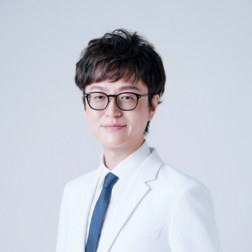
Noriyuki Ishizuka, MD
Director, ARIEL.BUST.CLINIC
Dr. Noriyuki Ishizuka is a board-certified plastic surgeon in Nagoya, Japan, specializing in breast augmentation (including fat transfer) and liposuction. In his articles, he explains the benefits, limitations, and risks of each option from a surgeon’s point of view.
Board-certified plastic surgeon, Japan Society of Plastic and Reconstructive Surgery (JSPRS) / Board-certified aesthetic surgeon, Japan Society of Aesthetic Plastic Surgery (JSAPS)
Your visa needs for breast augmentation depend on your travel plan
Japan offers two primary entry options for those seeking breast augmentation: a short-term stay visa and a medical stay visa. The choice depends on whether your country or region is eligible for a visa exemption and how long you plan to stay in Japan for treatment and recovery.
Short-term stay and medical stay visas follow different rules
The short-term stay is the more common option, but it is not a treatment visa. The medical stay visa is intended for individuals receiving medical services and has its own guarantor and application process.
Compare the two entry routes
| Point | Short-term stay | Medical stay visa |
|---|---|---|
| Main purpose | Tourism, business, or visiting friends and relatives without paid activities | Medical treatment, checkups, and other planned care |
| Length | Up to 90 days, depending on nationality | 90 days, 6 months, or 1 year, based on the person’s clinical condition |
| Longer than 90 days | Not available on this route | Requires a stay in a Japanese medical institution |
| Who helps arrange care | No special guarantor is required | A registered guarantor arranges the medical institution and certificate |
| Companions | Companions use the same standard entry rules | A companion may receive the visa when needed |
Short-term stay has a firm limit
A short-term stay allows visitors to remain for up to 90 days for purposes such as tourism, business, or visiting friends and family, provided they do not engage in paid work. The official description does not specify surgery as a permitted activity under this category.
Simply visiting a clinic does not clarify whether this option suits your situation. Some countries and regions allow entry without a visa, while others require one, with permitted stays varying from 15 to 30 or 90 days, depending on the individual’s nationality.
Medical stay visa has a longer window
The medical stay visa is granted to foreign patients traveling to Japan for medical treatment, including checkups, and to their companions when necessary.
The duration of the stay is determined based on the patient’s clinical condition and can be set for 90 days, 6 months, or 1 year. If the anticipated stay exceeds 90 days, the patient must remain in a Japanese medical institution.
How the medical stay visa application works
A medical stay visa cannot be issued by a clinic alone. The process begins with a registered guarantor, continues through a medical institution, and concludes with an application at a Japanese embassy or consulate before traveling.
Start with a registered guarantor
Start by compiling a list of guarantors registered for the medical visa program, which may include medical coordinators or travel agencies. Contact one of these guarantors and request assistance arranging your medical services.
The choice of medical institution will be determined based on this consultation, rather than by selecting a clinic independently.
Prepare the certificate and supporting documents
To obtain the necessary certificate from the medical institution regarding the planned services and the guarantor’s reference, you need to go through the guarantor.
For a multiple-entry visa, you must also provide a medical treatment plan from a physician in Japan, especially if each visit will last 90 days or less. The embassy or consulate may request the following:
- A passport
- A visa application form
- A photo
- Documents that show your financial situation
The exact documents vary by nationality. Confirm the list with the Japanese embassy or consulate where you will apply. The visa can be issued only at a Japanese diplomatic office abroad, not when you arrive or while you are staying in Japan.
Plan your stay around breast augmentation and recovery
Stay through suture removal whenever possible. That is about one week after surgery, although the right length depends on the procedure and where you will return.
If you cannot stay a week, two to three days can be appropriate when you can have sutures removed at home. I consider that timing reasonable for a silicone breast augmentation or a hybrid augmentation with only a little liposuction.
If the liposuction area is large, or your return flight is long after other procedures, I would rather have you stay about one week. These timings are my personal guide, not a promise.
Preparing for breast augmentation before you apply or book
It’s important to start the visa check process early, rather than waiting until the end of your planning. Entry requirements, certified documents, and medical schedules can all take time, and delays in any of these areas could postpone your surgery date.
Japan’s foreign ministry also encourages people traveling to Japan to buy overseas travel medical insurance in case of an emergency. It does not replace your public health coverage, and it is not a substitute for confirming your entry status.
A 2019 report on 72 patients who traveled to one Japanese hospital for cancer care found that incomplete referral documents and language gaps were common problems before treatment.1
It wasn’t a cosmetic surgery case, but the same principle applies: make sure your medical records and details are clear before you travel.
A 2011 survey of 203 plastic surgeons in the United Kingdom found that 37% had treated patients after cosmetic surgery abroad.2 Some patients arranged surgery and travel before meeting the surgeon. This should be avoided when planning breast augmentation in Japan.
Complications after cosmetic surgery abroad can also affect the return home. In a 2018 systematic review of 17 observational studies on breast augmentation tourism, infection and wound opening were among the reported problems.3
A longer, more relaxed recovery period gives you time to manage the initial healing phase before flying. Our clinic in Nagoya, Japan, offers consultations in English. You can contact us via email or our official LINE account both before your travel and after your surgery. We also provide you with your surgical records.
Consultations at our clinic in Nagoya, Japan, are in English, and you can reach us by email or our official LINE account before you travel and after surgery. We also provide you with your surgical records.
Frequently asked questions
- Do I always need a medical stay visa for breast augmentation in Japan?
-
No. Whether you need a visa depends on your nationality, how long you will stay, and the purpose of your visit. Many travelers enter through the short-term stay route, but the official description does not name surgery.
Do not assume your case is covered until a Japanese embassy or consulate confirms it.
- Can I get the medical stay visa after I arrive in Japan?
-
No. A Japanese visa is issued at an embassy, consulate-general, or consular office abroad. It cannot be obtained when you arrive in Japan or while you are staying in Japan.
Start the process early enough for your surgery date, and confirm the required documents with the office where you will apply.
- Does the clinic apply for the visa on my behalf?
-
Our published information does not describe visa application or guarantor services. I cannot promise that we can handle those steps for you.
A registered guarantor is still part of the medical stay visa process. Contact us through the clinic’s Contact page to ask what documents we can provide for your application.
- How long should I plan to stay after breast augmentation?
-
For optimal post-surgery recovery, a stay of about one week is recommended for checking healing progress until suture removal.
If a longer stay isn’t feasible, two to three days may suffice, provided that sutures can be removed in your home country and the procedure is relatively straightforward, such as silicone breast augmentation or hybrid augmentation with minimal liposuction.
For larger liposuction areas or long return flights, a longer stay is advised for safety. Review the procedure and return travel plans before booking flights. Ask us to review your procedure and return route before you book flights.
References
1. Awano, N., Takamoto, T., Kawakami, J., Genda, A., Ninomiya, A., Ikeda, M., Matsuno, F., Izumo, T., & Kunitoh, H. (2019). Issues associated with medical tourism for cancer care in Japan. Japanese Journal of Clinical Oncology, 49(8), 708-713. https://doi.org/10.1093/jjco/hyz061
2. Jeevan, R., Birch, J., & Armstrong, A. P. (2011). Travelling abroad for aesthetic surgery: Informing healthcare practitioners and providers while improving patient safety. Journal of Plastic, Reconstructive & Aesthetic Surgery : JPRAS, 64(2), 143-7. https://doi.org/10.1016/j.bjps.2010.04.022
3. Brightman, L., Ng, S., Ahern, S., Cooter, R., & Hopper, I. (2018). Cosmetic tourism for breast augmentation: a systematic review. ANZ Journal of Surgery, 88(9), 842-847. https://doi.org/10.1111/ans.14326
Young, L. K., Vimawala, S., Ahmad, N., Kushnir, V., Bonawitz, S. C., Brody, J. D., Enriquez, M. L., & Koshkareva, Y. A. (2019). Review of inbound medical tourism and legal details of obtaining a visa for treatment of head and neck cancer. Head & Neck, 41(8), E125-E132. https://doi.org/10.1002/hed.25743
Pereira, R. T., Malone, C. M., & Flaherty, G. T. (2018). Aesthetic journeys: a review of cosmetic surgery tourism. Journal of Travel Medicine, 25(1). https://doi.org/10.1093/jtm/tay042