If you live outside Japan and are considering breast augmentation in Nagoya, keep in mind that each clinic has its own policies on age requirements, identification documents, language support, contact methods, length of stay, and medical records.
Ask the clinic for a written summary of these policies before you finalize your travel plans.
We provide medical care for patients residing overseas. Please note that public entry and visa regulations differ, so it’s best to confirm these details with a Japanese embassy, consulate, or the Ministry of Foreign Affairs.
Written by
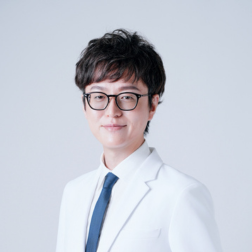
Noriyuki Ishizuka, MD
Director, ARIEL.BUST.CLINIC
Dr. Noriyuki Ishizuka is a board-certified plastic surgeon in Nagoya, Japan, specializing in breast augmentation (including fat transfer) and liposuction. In his articles, he explains the benefits, limitations, and risks of each option from a surgeon’s point of view.
Board-certified plastic surgeon, Japan Society of Plastic and Reconstructive Surgery (JSPRS) / Board-certified aesthetic surgeon, Japan Society of Aesthetic Plastic Surgery (JSAPS)
Clinic rules vary, and written answers help you plan
Some clinics in Japan facilitate surgery for international patients, while others do not. Each clinic, rather than a national guideline, determines the minimum age for patients, accepted forms of identification, interpreter requirements, payment methods, and aftercare procedures.
By providing written responses, clinics enable potential patients to compare details and arrive with a clear plan.
What we ask overseas breast augmentation patients to prepare
Before visiting our clinic, please consider these five important points:
- Identity
- Language
- Contact
- Stay length
- Records
We also list payment methods because those terms should be clear before you pay for a procedure.
A quick planning checklist
| Item | Our practice | What to confirm in writing |
|---|---|---|
| Identity and age | A passport or residence card is enough. Patients under 16 are not treated. | Which documents are accepted and what minimum age applies. |
| Language support | English consultations are available without an interpreter. | Whether the doctor or staff will explain in English at every visit. |
| Contact | Inquiry email and official LINE cover questions before and after surgery. | Which channels the clinic uses and how quickly it replies. |
| Stay after surgery | About one week after surgery is my guide. | How many days the clinic recommends for your method and flight route. |
| Records | We provide a written surgical record to share at home. | What record you will receive and when. |
| Payment | We accept cash, credit card, and bank transfer. | Which payment methods apply and when payment is due. |
Identity and age
You need a passport to verify your identity. A residence card is also acceptable if you already possess one. We do not treat anyone under 16 years of age. Please share your age and health history early in the conversation.
English consultations and contact
The language used affects how clear instructions are. In a review of 72 people who traveled to Japan for cancer care and other hospital treatment, 13 spoke neither Japanese nor English, which made explanations and instructions harder to follow.1 Consultations at our clinic are available in English and do not require an interpreter.
Before leaving home, please contact us via inquiry email or our official LINE account. After surgery, feel free to use these same channels for any questions, and we will respond promptly.
Planning your stay around breast augmentation recovery
Length of stay depends on your procedure, the volume of liposuction, and the length of your flight home. These are my personal estimates and not guarantees; they vary from person to person.
When a one-week stay is the safer plan
The most reassuring option, when your schedule permits, is to stay until the suture removal, which I typically schedule for about one week after surgery.
If you have undergone extensive liposuction or had a larger volume of fat removed, you may need to wait the full week before flying. Flying two or three days after surgery can be risky, depending on the flight duration.
When a 2-to-3-day stay can work
If you are unable to stay for a week, silicone breast augmentation or hybrid breast augmentation with minimal liposuction can often be accommodated within a two- to three-day stay. A short flight back to a nearby country may also make this shorter stay feasible.
However, after more extensive liposuction, I recommend staying until suture removal, especially if you have a long flight, such as to the United States, to ensure your safety.
If you plan to have your sutures removed at home, please inform us early and ask how that impacts your plan.
Why written records matter after breast augmentation abroad
We provide you with a written record of your surgery to share with the doctor who will care for you at home. Keeping this record accessible matters because recovery questions may arise weeks, months, or even years later.
Published reports illustrate the importance of follow-up. A systematic review of reported problems after aesthetic breast surgery abroad found wound infection in 39% of reported cases, though most sources were individual reports without a comparison group.2
A one-year review at a U.K. breast surgery unit found that 72% of patients seen for complications came within eight weeks of surgery, and only 48% had a surgery date in their records.3 Keep your surgical note with your travel documents and show it to any doctor you consult later.
Problems can also appear later. One hospital series of complications after cosmetic surgery abroad reported a median of 15 days for early issues and 4.9 years for late ones.4
What to confirm before you book any clinic
When comparing multiple clinics, use the same written checklist for each one.
Seek written information on minimum age, accepted ID, language support, minimum stay, and the record you will receive. Inquire about payment methods, cancellation policies, refunds, and photo storage during the same conversation.
Check with your nearest Japanese embassy or consulate to see whether a short-term stay visa or a medical stay visa suits your nationality and treatment plan.
A short-term stay visa can last up to 90 days, and some travelers may be able to enter Japan without a visa. A medical stay visa, by contrast, can allow a stay of up to one year and is typically linked to planned inpatient care for stays longer than 90 days.
A decision of this importance merits careful consideration and in-person discussion. In a survey of 364 plastic surgeons, most supported at least two in-person consultations with the operating surgeon and a cooling-off period before cosmetic breast augmentation.5
Our clinic in Nagoya, Japan, offers consultations in English and provides you with your surgical records. You can contact us via email or our official LINE account before traveling and after surgery.
Frequently asked questions
- Can I have breast augmentation at your clinic if I live outside Japan?
-
We treat patients who reside abroad. You must present a passport or residence card for identification, and we will verify the accepted document prior to your visit.
- Do I have to bring an interpreter?
-
Consultations are available in English, so you don’t need an interpreter. If possible, please bring a friend or family member for support after surgery.
- How long should I plan to stay in Japan after breast augmentation?
-
It is advisable to plan for about one week for suture removal after your surgery. If a week is not feasible, silicone breast augmentation or hybrid augmentation with minimal liposuction may allow a shorter stay of two to three days; however, this is a guideline, not a guarantee.
I will confirm and provide a recommendation after evaluating your procedure and travel plans.
- What records will I receive before I fly home?
-
We will provide a written record for you to share with your primary care physician. Please keep this document with your travel papers and present it during any future visits. This note will help doctors in your country understand your procedure and postoperative plan more easily.
References
1. Awano, N., Takamoto, T., Kawakami, J., Genda, A., Ninomiya, A., Ikeda, M., Matsuno, F., Izumo, T., & Kunitoh, H. (2019). Issues associated with medical tourism for cancer care in Japan. Japanese Journal of Clinical Oncology, 49(8), 708-713. https://doi.org/10.1093/jjco/hyz061
2. McCrossan, S., Martin, S., & Hill, C. (2021). Medical Tourism in Aesthetic Breast Surgery: A Systematic Review. Aesthetic Plastic Surgery, 45(4), 1895-1909. https://doi.org/10.1007/s00266-021-02251-1
3. Ahari, D., Zaccariah, Z. R., Preston, M., & Highton, L. (2024). The impact of cosmetic tourism across one year on an NHS breast surgery unit. Journal of Plastic, Reconstructive & Aesthetic Surgery, 99, 462-467. https://doi.org/10.1016/j.bjps.2024.10.036
4. Klein, H. J., Simic, D., Fuchs, N., Schweizer, R., Mehra, T., Giovanoli, P., & Plock, J. A. (2017). Complications After Cosmetic Surgery Tourism. Aesthetic Surgery Journal, 37(4), 474-482. https://doi.org/10.1093/asj/sjw198
5. Cooter, R. D., Brightman, L. A., Deva, A., Murphy, R. X., Larsen, M., & Khashaba, A. (2023). Developing an International Framework for Informed Consent in Plastic Surgery: A Focus on Cosmetic Breast Augmentation. Plastic and Reconstructive Surgery Global Open, 11(11), e5371. https://doi.org/10.1097/GOX.0000000000005371