How fat transfer and implants feel under your hand depends mostly on the tissue that covers the result. Fat transfer uses your own fat, so the breast keeps the softness and movement of natural tissue. An implant is a shell that your body wraps in a layer of its own tissue, and that layer decides how firm or smooth the surface feels.
Conditions inside your body matter more than the reputation of either method. Thick tissue over a graft or an implant tends to feel smoother, while thin tissue makes edges, ripples, and firm spots easier to notice. The texture that follows each method also changes during the first year, as swelling fades and the tissue settles.
Reading about texture helps you judge which changes are expected and which ones need a closer look. A person with generous tissue may feel little difference between the two methods, while a person with thin tissue may feel every edge.
Written by
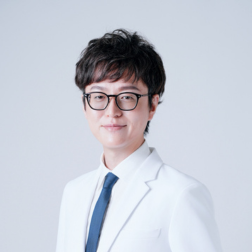
Noriyuki Ishizuka, MD
Director, ARIEL.BUST.CLINIC
Dr. Noriyuki Ishizuka is a board-certified plastic surgeon in Nagoya, Japan, specializing in breast augmentation (including fat transfer) and liposuction. In his articles, he explains the benefits, limitations, and risks of each option from a surgeon’s point of view.
Board-certified plastic surgeon (JSPRS) / Board-certified aesthetic surgeon (JSAPS)
How fat transfer and implants feel to the touch
Reports that compare the two methods tend to rate fat transfer as the more natural result. The grafted fat becomes part of the breast and follows its shape, so the surface keeps a natural softness. An implant stays separate inside a capsule of scar tissue, and its surface feels only as soft as the tissue covering it.
Two published comparisons looked at results after breast augmentation. Fat transfer scored higher for natural-looking results, implants scored higher for the size of the change, and scores for emotional and physical well-being came out about even.1,2
What softness ratings really measure
A soft result comes from a thick cover of your own tissue over the graft or the implant. Fat transfer thickens that cover by adding fat, while an implant relies on the tissue you already have. When the cover is thin, a shell, an edge, or a firm spot sits closer to the surface and is easier to feel.
These comparisons lean on how the result looks in photographs and videos, so a high naturalness score is not a promise about how the breast will feel in your hand. A surgeon can estimate your own cover during an examination.
Why the same method feels different in every person
Two people can receive the same implant size and end up with two different textures. The pinch thickness of the skin and fat above the breast, the strength of the capsule the body forms, and the amount of fat injected each change the surface. Comparing your own tissue matters more than comparing a friend’s result.
The capsule around an implant is thin and soft in most people, and it stays unnoticed. When it thickens or tightens, the breast grows firmer than it was in the first months after surgery.
Why fat transfer or implants can change how your breast feels
Four things shape the surface after either method. They are the thickness of the tissue cover, the capsule the body builds around an implant, the volume added in one session, and the way the tissue heals. Each one can make a result feel softer or firmer, so a firm spot does not always mean a problem.
What changes the surface after each method
Most shifts in texture trace back to the cover of tissue and to how the body heals around what was added.
| Change in texture | More likely when | Method |
|---|---|---|
| A firm, tight feeling from a thick capsule | The body forms scar tissue around the implant | Implant |
| Ripples you can feel | Thin tissue cover or low body weight | Implant |
| An edge that presses near the skin | Little tissue over the implant | Implant |
| Movement during upper-body effort | The implant sits under the chest muscle | Implant |
| A firm lump that stays | A large volume of fat is injected at once | Fat transfer |
| Softness that follows the breast | Enough fat survives and the cover stays thick | Fat transfer |
Not every change in texture signals a complication. Some textures follow from where the tissue sits and how the body heals, and they stay stable over time.
How healing changes the surface in the first year
Swelling and bruising soon after surgery make both methods feel firmer than they will later. An implant sits inside a fresh capsule that softens gradually, while grafted fat loses the part that does not take a blood supply. Texture in the first month is a poor guide to the final result.
When an implant feels firm: capsular contracture
Every implant forms a capsule of scar tissue around itself, and in some people that capsule tightens. A tightening capsule makes the breast feel firmer than before and can pull the shape upward or sideways. Firmness and other symptoms vary by grade, so a hard breast calls for an examination rather than a guess.
Across 91 pooled studies, capsular contracture appeared in about 6.9% of breasts when the implant sat under the gland and about 1.8% when it sat under the chest muscle.3
Signs a capsule is tightening
- A breast that feels firmer than it did in the first months
- A shape that starts to look rounder or higher
- Aching or tenderness that does not settle
- A change that appears in one breast only
Surgeons grade capsular contracture from mild to severe, and a mild grade often needs no treatment.
Which pocket lowers the risk
Placement under the chest muscle carried a lower rate of contracture in the same pooled data, and placement under the gland carried a higher one. Muscle placement has its own trade-offs, which appear when the chest muscle contracts.
What the filling and shell do to firmness
The filling inside the shell makes little difference to firmness. Pooled comparisons found no clear gap in contracture between saline and silicone implants, while the layer the implant sat in changed the rate.
Rippling and edges you can feel
Rippling is the wavy texture some implants create near the surface, and it appears when the cover of tissue is thin. It ranges from a fine texture you notice only with your fingers to a wave that shows in a mirror. People with little breast tissue and low body weight notice it most.
In a three-year follow-up of 223 women, 32% could feel rippling and 18% could see it, and the rates were similar for saline and silicone implants.4
How the grade is described
- A texture you can feel but not see
- A wave that shows only when you bend forward
- A wave that stays visible when you stand
The outer-lower part of the breast and the inner-upper area near the cleavage are where rippling usually shows first.
Why thin tissue shows rippling more
When the layer of fat and gland over the implant is thin, the shell sits close to the skin and each fold presses through. Adding a small amount of fat over the implant is one way to thicken that cover and improve how soft the surface feels.
Weight changes matter too, because losing fat from the chest thins the cover that hides the shell.
How chest muscles change what you feel when you move
An implant placed under the chest muscle rests on the pectoralis major, so the muscle pulls the implant when it contracts. A forceful push-up or a heavy lift can shift the breast for a moment, and it settles when the muscle relaxes. This movement is mechanical rather than a sign that the implant has failed.
Movement with chest effort is more often noticed when the implant sits under the muscle than when it sits above it. People who train their chest or lift for work may see the breast change shape during a set and return to its usual look afterward.
Telling normal movement from a problem
A brief change during exercise is expected when an implant sits under the muscle. A shape that stays different at rest, or pain that lingers after activity, is worth showing to a surgeon.
How fat transfer feels when fat dies and forms lumps
Not all injected fat survives, and the fat that dies turns into scar tissue or a small oil cyst. These areas can feel like a firm lump under the skin, and they are the most common texture change after fat transfer. Most lumps are benign, but a new lump always calls for a check.
In a review of 2,073 women who had fat transfer to the breast, 2.0% developed a palpable lump and 16.4% were referred for extra imaging.5
Why the volume of fat matters
Fat needs a blood supply to survive, and a large volume in one session leaves some of it without enough blood. When surgeons inject more fat than the tissue can support, more of it dies and scars.
What a lump means for later imaging
Oil cysts and calcifications from fat transfer show up on mammograms and ultrasound, and their appearance can overlap with other findings. That overlap is why some people are sent for extra views or a biopsy after fat transfer.
Nipple and skin sensation after surgery
The nerves that serve the nipple and the skin pass through the breast, and an implant can stretch or bruise them during surgery. Sensation may feel duller, sharper, or different for a few months, and most people recover. A lasting change is uncommon, though a sensitive test can still detect a difference.
In a follow-up of 4,927 women, fewer than 1% reported a lasting change in nipple or skin sensation, though a filament test in a smaller group of 55 women measured duller sensation after surgery.6,7
Why the incision and the pocket matter
The path a surgeon uses to reach the breast changes which nerves sit near the cut. The layer the implant sits in can also change which parts of the breast stay sensitive.
Most reports about sensation come from implant surgery, and fat transfer has been studied less for this. Sensation is one of the points worth raising at a follow-up visit.
When a change needs attention
A nipple that stays numb for many months, or pain that does not settle, is worth a review. Surgeons usually track sensation at follow-up visits, and early changes often improve on their own.
Body traits that shape how fat transfer and implants feel
Your own tissue decides how much of the result you can feel through the skin. A thick layer of fat and gland over the implant or the graft hides edges and ripples, while a thin layer leaves them closer to your fingers. The same implant size can feel soft in one person and firm in another for this reason.
What to check at a consultation
These points change the texture of a result, and a surgeon can measure most of them in the office.
- How thick is the tissue over the upper part of my breast?
- Which pocket would you use for my implant?
- How much fat can you inject in one session?
- How would you manage rippling or a firm edge later?
- What will you check at my follow-up visits?
A surgeon who measures these points can say whether your tissue suits fat transfer, an implant, or a mix of the two.
Frequently asked questions
- Which method feels more natural to the touch?
-
Fat transfer is usually rated as the more natural result, because the added tissue is your own and the breast keeps its own softness. An implant can feel just as soft when a thick layer of tissue covers it. The cover of tissue over the result decides the texture, not the method alone.
- Can I feel the implant through my skin?
-
Sometimes you can, especially when the tissue over the breast is thin. You may notice the edge of the shell or a slight ridge along the outer side. Feeling the implant does not mean it has failed.
- Why does my breast feel hard after an implant?
-
A tight capsule of scar tissue is the usual reason a breast feels hard, and it can also change the shape.
A surgeon will grade the firmness and decide whether to watch it or treat it. Options range from observation to surgery, depending on pain and on how much the shape has changed.
- Will a lump after fat transfer go away on its own?
-
Some oil cysts shrink over months as the body absorbs them, while others stay as a small firm spot.
A lump that is new, growing, or painful should be checked, and imaging or a biopsy may be needed to identify the cause.
- How soon can I tell how the result feels?
-
The first weeks are a poor guide, because swelling, bruising, and a fresh capsule change the texture.
Softness settles over several months as the tissue relaxes and, after fat transfer, as the surviving fat takes hold. Ask your surgeon when to judge the final feel.
References
1. Gentile, P. (2021). Breast Silicone Gel Implants versus Autologous Fat Grafting: Biomaterials and Bioactive Materials in Comparison. Journal of Clinical Medicine, 10(15). https://doi.org/10.3390/jcm10153310
2. AlGhanim, K., Minkhorst, K., Jaszkul, K. M., Keelan, S., Appleton, S., DeLyzer, T., & Yazdani, A. (2025). Fat Grafting Versus Implants: Who’s Happier? A Systematic Review and Meta-analysis. Plastic Surgery, 33(1), 23-34. https://doi.org/10.1177/22925503231190930
3. Alderhali, R., Jamel, W. A., Dehnadi, S., Seth, I., & Khajuria, A. (2026). Implant Pocket Plane Selection in Primary Breast Augmentation: A Meta-Analysis and Systematic Review of Complication Profiles. Aesthetic Plastic Surgery, 50(11), 3979-3987. https://doi.org/10.1007/s00266-026-05706-5
4. Swanson, E. (2020). Prospective Study of Saline versus Silicone Gel Implants for Subpectoral Breast Augmentation. Plastic and Reconstructive Surgery Global Open, 8(6), e2882. https://doi.org/10.1097/GOX.0000000000002882
5. Ørholt, M., Larsen, A., Hemmingsen, M. N., Mirian, C., Zocchi, M. L., Vester-Glowinski, P. V., & Herly, M. (2020). Complications after Breast Augmentation with Fat Grafting: A Systematic Review. Plastic and Reconstructive Surgery, 145(3), 530e-537e. https://doi.org/10.1097/PRS.0000000000006569
6. Lund, H. G., Turkle, J., Jewell, M. L., & Murphy, D. K. (2016). Low Risk of Skin and Nipple Sensitivity and Lactation Issues After Primary Breast Augmentation with Form-Stable Silicone Implants: Follow-Up in 4927 Subjects. Aesthetic Surgery Journal, 36(6), 672-80. https://doi.org/10.1093/asj/sjv266
7. Üstün, G. G., Sert, B., Demirli, Z. N., Dağ, O., Uzun, H., & Özgür, F. (2025). Long-term breast sensation following breast augmentation: A retrospective analysis of influencing factors. Journal of Plastic, Reconstructive & Aesthetic Surgery, 104, 351-358. https://doi.org/10.1016/j.bjps.2025.03.041
Chang, C. S., Lanni, M. A., Mirzabeigi, M. N., & Bucky, L. P. (2022). Large-Volume Fat Grafting: Identifying Risk Factors for Fat Necrosis. Plastic and Reconstructive Surgery, 150(5), 941e-949e. https://doi.org/10.1097/PRS.0000000000009655
Li, Z., Zhang, Z., Zhang, Z., Guan, X., & Xin, M. (2024). Hybrid Breast Augmentation: Double Benefit or Double Risk? A Comparative Study of 932 Cases. Plastic and Reconstructive Surgery, 153(2), 325-335. https://doi.org/10.1097/PRS.0000000000010498