Fat transfer can enlarge the breasts, but one session usually creates a modest change. If you’re aiming for about one cup size, a single fat transfer may get you close, but some people need a second session to reach the look they want.
Implants offer more predictable volume in one operation, but they require enough breast width and soft tissue to sit naturally. The decision comes down to how much size you want, how much fat you have available, and how much uncertainty you can accept.
Written by
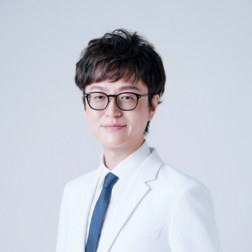
Noriyuki Ishizuka, MD
Director, ARIEL.BUST.CLINIC
Dr. Noriyuki Ishizuka is a board-certified plastic surgeon in Nagoya, Japan, specializing in breast augmentation (including fat transfer) and liposuction. In his articles, he explains the benefits, limitations, and risks of each option from a surgeon’s point of view.
Board-certified plastic surgeon (JSPRS) / Board-certified aesthetic surgeon (JSAPS)
How cup size, implant volume, and fat transfer planning connect
A cup size is a clothing label, not a medical measurement. The same cup letter can hold different volumes across band sizes and bra brands, so a size goal is clearer in milliliters than as a fixed cup letter.
One cup size is commonly estimated at 130 to 150 mL, but manufacturers can vary enough that this number is most useful as a planning range.1 A retained volume above that range often looks like more than one cup of change, while a smaller amount may look like a subtler shift.
What one fat transfer session can add
One fat transfer session can add real volume, but less remains than was injected. The retained volume, not the syringe total, gives a more realistic sense of the final size.
Injected volume and retained volume
A systematic review of breast fat grafting reports an average injected volume near 300 mL with a wide range, and both it and a long-term MRI study found roughly half the volume remaining once some fat was absorbed.2,3 Some imaging studies show lower retention, and reported percentages also depend on how the volume is measured.
What the measured gain looks like
If 130 to 150 mL represents one cup, a retained volume below 100 mL may fall short of a full cup in many bras. A 10-patient 3D study measured one-year gains of 85.1 and 98.1 mL per breast after 236 to 250 mL injections, while cosmetic series averaged 1.3 to 1.9 sessions before reaching the desired size.4,5,6 Those numbers suggest that one session is often enough for a visible change, but not always enough for a full cup size.
How many sessions reach a larger size
A larger goal often takes more than one fat transfer. The average number of sessions in cosmetic series has ranged from about 1.3 to close to 2, and in the series with the lower average, most patients reached their goal after one procedure.
Why the body keeps only part of the fat
Transferred fat needs a new blood supply to survive. Fat placed in thin, well-spaced strands is more likely to remain than a large deposit in one area, and the body often clears some transferred tissue during the first months.
What changes how much remains
- The amount of harvestable fat on the abdomen, thighs, or flanks
- The starting breast volume and the space available under the skin
- Postoperative weight stability, because grafted fat behaves like body fat
- The injection pattern and how widely the surgeon places the fat
When the final size is clear
Swelling and early absorption can make the breast look different from week to week. The volume usually becomes clear around eight months, and weight changes after that point can still move the result. Waiting for that settling period is more useful than judging the size in the first few weeks.
Why larger single fat transfer sessions have limits
Injecting more fat in one session may seem faster, but the breast can only support so much transferred tissue at one time. Large single-session volumes raise the chance that some fat dies and forms a firm area or lump.
How injected volume affects fat necrosis
In one surgeon’s retrospective study of large-volume fat grafting, fat necrosis increased as the injected volume rose, with the risk becoming more apparent beyond 450 mL in one breast.7 That is one reason to plan a moderate volume per session even when the goal is a larger final size.
Why one-session mega-volume reports need context
One clinic reported a two-cup increase after large single-session transfers, but it followed patients for only six months and measured results by chest size and cup size rather than imaging.
A method that produces a quick visible increase may still leave questions about lumps, retained volume, and what happens years later.
For most people, a moderate change per session with the option of a second session is a more conservative plan. It also gives you time to reassess symmetry and the donor area.
How implant size choices compare with cup goals
Implants hold their volume once placed, so the size conversation is more direct. The challenge is matching the device to the breast width, tissue thickness, and the look you want in clothing.
Common implant volumes
A survey of breast surgeons found common implant sizes of 250 to 350 cc; one study reported average sizes of 246 to 277 cc, and another found that 19.4% of patients wished they had gone larger at 12 weeks.8,9,10
Because one cup is estimated at 130 to 150 mL, these volumes often translate to more than one cup size, but the final bra size still depends on the starting breast.
Sizing trials and later size preferences
Preoperative sizing lets you wear a larger bra with sample implants and compare the silhouette before surgery. Trying on the size makes it tangible, although it cannot rule out every later change in preference.
Choosing fat transfer or implants for your target cup size
The better choice depends on how far you want to move from your current size, how much donor fat is available, and how much the final volume can vary. A consultation should turn those general numbers into a plan for your body.
Matching the goal to each method
Fat transfer is a reasonable option when your goal is small, you have plenty of donor fat, and you are comfortable with a possible second session. For a larger or more exact goal, an implant is often the better fit, especially when the breast base and tissue can accommodate it.
| Size goal | Fat transfer | Implants |
|---|---|---|
| About one cup | May require one or two sessions | Commonly achievable when the implant fits the breast width |
| About two cups | Usually requires repeated sessions and enough donor fat | Often achievable with larger volumes if tissue allows |
| Precise size control | Less predictable because retention varies | More predictable once the dimensions are selected |
| Fullness without a device | Uses your own fat | Requires a breast implant |
These rows are starting points, not rules. Your surgeon may adjust the recommendation if your skin is tight, your breast fold is high, or your donor areas are limited.
When a smaller implant plus fat helps
For a very thin person with little breast coverage, a small implant can create the main projection while fat softens the edges. That combined plan can use a smaller device than an implant-only approach and still add volume, but it still requires some donor fat.
A study comparing the two methods described fat transfer as suited to moderate enlargement rather than a very large size change, and some people who choose only a subtle increase later find the result too modest.
What to tell your surgeon
Describe your goal in visual terms, not just cup letters. These points help your surgeon choose between one method, staged fat grafting, or a combined plan.
- The cup range and clothing silhouette you want
- How much donor fat is available on your abdomen, thighs, or flanks
- Whether you can accept a possible second fat transfer session
- Your current breast width and the amount of tissue that can cover an implant
- The smallest change you would still consider worth having
Write down these details before the visit. A surgeon who knows your acceptable range can give a more realistic estimate of how many fat transfer sessions or what implant volume you may need.
For a personalized comparison of fat transfer and implants, consider a consultation at our clinic in Nagoya, Japan.
Frequently asked questions
- How many cup sizes can fat transfer add in one session?
-
Usually less than one full cup in a single session. Some people see a more noticeable change, but measured gains are often modest because not all injected fat survives.
For a one-cup goal, ask the surgeon before surgery how much fat they can collect and how many sessions are realistic.
- Do I need implants to increase by two cup sizes?
-
Not always. In published case series, reaching the desired size took an average of about 1.3 to nearly 2 sessions, although those studies did not report the change in cup size. A staged path requires enough donor fat and more time. Implants often produce that change more predictably.
Ask the surgeon to compare the likely number of fat transfer sessions with the implant volume that fits your breast width.
- Is 130 to 150 mL per cup size an exact rule?
-
No. The 130 to 150 mL figure is a planning estimate, not a fixed result. Some people may see about one cup from that range. Others may see a smaller or larger change because bra brands, band size, and starting breast volume all affect the fit.
- Can I do one large fat transfer instead of two sessions?
-
It is possible, but larger single-session volumes carry a higher risk of fat necrosis. A moderate volume, with a second session if needed, is the more cautious plan.
Ask what volume limit your surgeon uses and how they’ll check for lumps or firm areas afterward.
- When will I know my final breast size after fat transfer?
-
The volume usually settles around eight months after surgery. Swelling and early absorption can make the first few months misleading.
Wait for that settling period before deciding whether another session would improve the result.
- Does weight change affect the final size?
-
Yes. Grafted fat behaves like body fat so that weight loss can reduce the result. An implant keeps its volume, but the surrounding breast tissue can still change with weight shifts.
Tell the surgeon if your weight has changed a lot in the past or tends to fluctuate, because that history can affect the recommendation.
References
1. King, N. M., Lovric, V., Parr, W. C. H., Walsh, W. R., & Moradi, P. (2017). What Is the Standard Volume to Increase a Cup Size for Breast Augmentation Surgery? A Novel Three-Dimensional Computed Tomographic Approach. Plastic and Reconstructive Surgery, 139(5), 1084-1089. https://doi.org/10.1097/PRS.0000000000003247
2. Seth, I., Bulloch, G., Gibson, D., Chow, O., Seth, N., Mann, G. B., Hunter-Smith, D. J., & Rozen, W. M. (2024). Autologous Fat Grafting in Breast Augmentation: A Systematic Review Highlighting the Need for Clinical Caution. Plastic and Reconstructive Surgery, 153(3), 527e-538e. https://doi.org/10.1097/PRS.0000000000010614
3. Ørholt, M., Weltz, T. K., Hemmingsen, M. N., Larsen, A., Bak, E. E. F., Norlin, C. B., Hart, L., Elberg, J. J., Vester-Glowinski, P. V., & Herly, M. (2025). Long-Term Volume Retention of Breast Augmentation with Fat Grafting Depends on Weight Changes: A 3-Year Prospective Magnetic Resonance Imaging Study. Plastic and Reconstructive Surgery, 155(6), 947-954. https://doi.org/10.1097/PRS.0000000000011841
4. Spear, S. L., & Pittman, T. (2014). A prospective study on lipoaugmentation of the breast. Aesthetic Surgery Journal, 34(3), 400-8. https://doi.org/10.1177/1090820X13520449
5. Mangialardi, M. L., Ozil, C., & Lepage, C. (2022). Cosmetic Breast Augmentation Using Power-Assisted Liposuction and Lipofilling: A Prospective Study. Aesthetic Plastic Surgery, 46(1), 132-142. https://doi.org/10.1007/s00266-021-02309-0
6. Yin, B., Zhang, X., Cai, L., Han, X., & Li, F. (2022). Function-preserving fat grafting in the breast: Results based on 18 years of experience. Journal of Plastic, Reconstructive & Aesthetic Surgery, 75(9), 2996-3003. https://doi.org/10.1016/j.bjps.2022.04.084
7. Chang, C. S., Lanni, M. A., Mirzabeigi, M. N., & Bucky, L. P. (2022). Large-Volume Fat Grafting: Identifying Risk Factors for Fat Necrosis. Plastic and Reconstructive Surgery, 150(5), 941e-949e. https://doi.org/10.1097/PRS.0000000000009655
8. Montemurro, P., Cheema, M., & Hedén, P. (2023). Modified Delphi Technique to Identify Management of Aesthetic Breast Augmentation: Will We Reach a Consensus? Plastic and Reconstructive Surgery, 151(4), 759-770. https://doi.org/10.1097/PRS.0000000000009992
9. Hidalgo, D. A., & Spector, J. A. (2010). Preoperative sizing in breast augmentation. Plastic and Reconstructive Surgery, 125(6), 1781-1787. https://doi.org/10.1097/PRS.0b013e3181cb6530
10. Brown, T. (2013). Patient expectations after breast augmentation: the imperative to audit your sizing system. Aesthetic Plastic Surgery, 37(6), 1134-9. https://doi.org/10.1007/s00266-013-0214-1