If you are traveling to Japan for breast augmentation, you may not need to make a separate trip for a follow-up appointment. You can often schedule one during your stay.
Decide where your sutures will be removed and which doctor will follow up with you after you return. Clear communication on these points can make your recovery more straightforward.
Written by
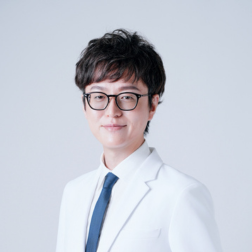
Noriyuki Ishizuka, MD
Director, ARIEL.BUST.CLINIC
Dr. Noriyuki Ishizuka is a board-certified plastic surgeon in Nagoya, Japan, specializing in breast augmentation (including fat transfer) and liposuction. In his articles, he explains the benefits, limitations, and risks of each option from a surgeon’s point of view.
Board-certified plastic surgeon, Japan Society of Plastic and Reconstructive Surgery (JSPRS) / Board-certified aesthetic surgeon, Japan Society of Aesthetic Plastic Surgery (JSAPS)
Plan follow-up care before you travel for breast augmentation
Most people do not need to fly back to Japan just for a scheduled checkup. Whether you return depends on the procedure, the care available near your home, and any symptoms that appear after you leave.
Finalize your follow-up plan prior to the surgery date. A local doctor can perform many wound checks while we continue to guide you from Japan via email or official LINE.
How long to stay in Japan after breast augmentation
It’s important to monitor the healing process before removing sutures, preferably about a week after surgery.
If you cannot stay that long and a doctor is available to remove your sutures at home, a stay of two to three days can be sufficient for silicone breast augmentation or a hybrid procedure with minimal liposuction.
Extensive liposuction or larger body changes affect flying timing, as does a long flight after other procedures. In those cases, I recommend waiting about one week before flying.
These time frames are personal guidelines, not guarantees. Your recovery, the specifics of the procedure, and your travel arrangements all influence this decision. Please confirm the date with me before booking your flight.
What to arrange before you leave Japan
The final days in Japan are a good time to confirm the documents and contacts you will need at home. A brief checklist can prevent gaps between your clinic visit and local care.
- A written record of the operation and any implant details
- The clinic contact path for questions after you return
- A local doctor who has agreed to see you if symptoms appear
- Clear notes on any planned ultrasound follow-up
Keep this record with you while traveling, and show it to any doctor you visit after returning. If your local doctor needs the record in a different language or format, please ask us before you leave.
When to see a local doctor after you return
Do not wait for a scheduled trip if a new symptom concerns you. A local doctor can usually examine the wound, and early attention often prevents a small problem from becoming an emergency.
Many issues that lead travelers to return to a clinic after cosmetic surgery occur early on. A review of hospital records over one year found that 72% of people sought medical care within eight weeks post-surgery.1
Not every patient develops a problem; rather, it highlights when issues tend to arise among those seeking care.
Complications after cosmetic surgery abroad can surface much later. A review of women who visited a hospital found that early complications occurred a median of 15 days post-surgery, while late complications emerged a median of 4.9 years later.2
A rare implant infection can develop months after surgery; studies indicate symptoms typically appear around nine months post-operation.3
Fat transfer volume changes over several months. In a three-year MRI study involving 28 individuals, the volume took an average of 253 days to stabilize.4 A small area of firmness may sometimes be treated with a brief office procedure; however, any new lump should still be examined.
The need for routine imaging of implants after recovery is debated. Some recommend ultrasounds or MRIs every few years, while others say no imaging is needed unless symptoms occur. If you notice a lump or changes, start with an ultrasound.
In a study of 57 cosmetic surgery patients, 50 of the 52 people who answered said a smartphone photo check-in improved their postoperative experience, and 3 people had early problems.5
That arrangement doesn’t replace an in-person exam, but it shows how quickly photo sharing can identify a concern early.
What a return trip for a checkup costs
A return trip incurs additional travel, lodging, and clinic fees. If the purpose is merely a routine check that a local doctor can handle, you can avoid this expense entirely.
Where the main costs come from
| Expense | What to check | Why it varies |
|---|---|---|
| Airfare | Change fees and fare rules | Season and booking time |
| Lodging | Hotel or guesthouse rate | Neighborhood and length of stay |
| Clinic visit | Follow-up appointment fee | Procedure and required imaging |
| Local care at home | Your doctor’s charge | Whether imaging is required |
Before booking an appointment, ask the clinic whether a follow-up visit will incur an additional charge, as this may not be outlined on the published price page. Also ask how the ultrasound follow-up for fat transfer is coordinated for overseas patients.
A doctor in your home country may charge you directly for a wound check or an ultrasound, because planned treatment abroad is often outside standard travel insurance.
How to budget for a possible return trip
Set aside a travel buffer rather than assuming you will be back on a fixed date. Even a short return could include a new flight, two or three nights in Nagoya, and one consultation.
Before you book surgery, ask what would happen if a problem required more care in Japan. The answer should include how easy it would be to return, where the appointment would take place, and how the decision to travel would be made.
Also ask what would change if the original plan needs revision. Check ticket flexibility before buying. A fare that allows changes may cost more upfront, but it can make arranging a later return much easier.
Check ticket flexibility before buying. A fare that allows changes may cost more upfront, but it can make a later return much easier to arrange.
Consultations at our clinic in Nagoya, Japan, are conducted in English. You can reach us by email or through the official LINE app before you travel and after surgery. We also provide you with your surgical records.
Frequently asked questions
- Will I always have to fly back to Japan for a checkup?
-
No. You may be able to have sutures removed at home and see a local doctor for new symptoms after you return. Before booking, ask us whether you need an ultrasound follow-up in Nagoya.
- Can I leave Japan two or three days after breast augmentation?
-
It depends on the procedure. If you cannot stay a week, a two-to-three-day stay can be acceptable for silicone breast augmentation or a hybrid procedure with little liposuction, when a local clinician will remove sutures.
Extensive liposuction, a larger body, or a long flight after other procedures may require about one week. Confirm the timing with us before flying.
- What should I do if I notice a problem after returning home?
-
Contact your local doctor promptly if you develop new pain, redness, fever, drainage, or an open wound. You can also reach us through the inquiry email or official LINE for questions about what to report.
- How much should I budget for a possible return trip?
-
There is no single number because airfare and lodging change. Set aside enough for a new flight, a short hotel stay, one clinic visit, and one local consultation, then confirm any clinic fee before you travel.
References
1. Ahari, D., Zaccariah, Z. R., Preston, M., & Highton, L. (2024). The impact of cosmetic tourism across one year on an NHS breast surgery unit. Journal of Plastic, Reconstructive & Aesthetic Surgery: JPRAS, 99, 462-467. https://doi.org/10.1016/j.bjps.2024.10.036
2. Klein, H. J., Simic, D., Fuchs, N., Schweizer, R., Mehra, T., Giovanoli, P., & Plock, J. A. (2017). Complications After Cosmetic Surgery Tourism. Aesthetic Surgery Journal, 37(4), 474-482. https://doi.org/10.1093/asj/sjw198
3. Al-Halabi, B., Viezel-Mathieu, A., Shulman, Z., Behr, M. A., & Fouda Neel, O. (2018). Breast Implant Mycobacterial Infections: An Epidemiologic Review and Outcome Analysis. Plastic and Reconstructive Surgery, 142(5), 639e-652e. https://doi.org/10.1097/PRS.0000000000004892
4. Ørholt, M., Weltz, T. K., Hemmingsen, M. N., Larsen, A., Bak, E. E. F., Norlin, C. B., Hart, L., Elberg, J. J., Vester-Glowinski, P. V., & Herly, M. (2025). Long-Term Volume Retention of Breast Augmentation with Fat Grafting Depends on Weight Changes: A 3-Year Prospective Magnetic Resonance Imaging Study. Plastic and Reconstructive Surgery, 155(6), 947-954. https://doi.org/10.1097/PRS.0000000000011841
5. Pozza, E. D., D’Souza, G. F., DeLeonibus, A., Fabiani, B., Gharb, B. B., & Zins, J. E. (2017). Patient Satisfaction With an Early Smartphone-Based Cosmetic Surgery Postoperative Follow-Up. Aesthetic Surgery Journal, 38(1), 101-109. https://doi.org/10.1093/asj/sjx079
Ho, I. W., Chichura, A., Pederson, H. J., Xavier, B. A., Ritner, J., & Schwarz, G. S. (2024). Current State of Evidence-Based Long-Term Monitoring Protocols for Breast Plastic Surgery Patients. Annals of Surgical Oncology, 31(12), 8372-8382. https://doi.org/10.1245/s10434-024-16003-3
Ørholt, M., Larsen, A., Hemmingsen, M. N., Mirian, C., Zocchi, M. L., Vester-Glowinski, P. V., & Herly, M. (2020). Complications after Breast Augmentation with Fat Grafting: A Systematic Review. Plastic and Reconstructive Surgery, 145(3), 530e-537e. https://doi.org/10.1097/PRS.0000000000006569