If you are planning to travel to Japan for breast augmentation, confirm the clinic’s payment methods before booking flights or accommodation. The timing, fees, and limits may vary by clinic, card issuer, and bank.
Written by
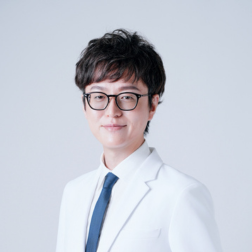
Noriyuki Ishizuka, MD
Director, ARIEL.BUST.CLINIC
Dr. Noriyuki Ishizuka is a board-certified plastic surgeon in Nagoya, Japan, specializing in breast augmentation (including fat transfer) and liposuction. In his articles, he explains the benefits, limitations, and risks of each option from a surgeon’s point of view.
Board-certified plastic surgeon, Japan Society of Plastic and Reconstructive Surgery (JSPRS) / Board-certified aesthetic surgeon, Japan Society of Aesthetic Plastic Surgery (JSAPS)
How payment usually works at a breast augmentation clinic in Japan
We accept cash, credit cards (Visa, Mastercard, JCB, American Express), and bank transfers. Other clinics may have different payment options, so please confirm with the clinic where you plan to have surgery.
The three payment methods at a glance
| Method | Check before you travel | What can go wrong |
|---|---|---|
| Cash | Whether the clinic will accept the full amount in notes and when payment is due | ATM withdrawal limits and the customs rule for amounts above ¥1,000,000 |
| Credit card | Your spending limit and whether your card issuer may flag an overseas charge | A declined payment or unexpected issuer fees |
| Bank transfer | The exact account name and number, accepted currency, and arrival time | Intermediary bank fees deducted from the amount you send |
When a breast augmentation clinic usually collects payment
In many Japanese clinics, domestic patients typically pay after their consultation, either when they book a procedure or when they begin treatment. However, if you are traveling from outside Japan, the payment schedule may vary, and not all clinics require advance payment.
Confirm deposits for overseas patients
Some clinic policies are designed for individuals already in Japan. Do not assume the same schedule applies when arranging care from another country.
Request written confirmation from the clinic about the payment terms, specifically if the full amount is due after your consultation or before your arrival, and whether a deposit secures the surgery date.
Paying by credit or debit card
Credit and debit cards are commonly used in Japan, and many clinics accept cards with international brand logos. The most likely issue you may encounter is your card limit or a security block, not a problem with the clinic’s card machine.
Confirm the limit with your card issuer
A breast augmentation fee can be significantly higher than a typical travel expense. Before you leave, contact your card company with the country, dates, and expected amount, as some companies may freeze cards after unexpected overseas charges.
If you plan to use a debit card, please check with us first. The money will be deducted from your bank account when the charge is processed. Your bank can inform you about any foreign transaction fees and whether the charge will be processed in the local currency.
Sending an international bank transfer
We accept bank transfers, but the process usually takes longer and may involve intermediary banks between you and the clinic.
Record the account details carefully
Make sure to copy the receiving account name, account number, and routing details accurately. Even a small mistake could cause the transfer to be returned, and either the sending bank or an intermediary bank may deduct fees before returning the money to you.
Some banks state that intermediary bank charges may be deducted from the amount sent. Ask the clinic how much it needs to receive and who pays any sender-side or receiver-side fees, because an exact amount is easier to reconcile.
Using cash during a Japan trip
Using cash is a direct payment method; however, it is often impractical for a large breast augmentation payment. You may hit ATM withdrawal limits in Japan or be required to declare a large amount at customs.
Plan around ATM and customs limits
ATMs in Japan that accept foreign cards typically limit the amount you can withdraw per transaction. This limit may be either ¥50,000 or ¥100,000, depending on the specific ATM operator. Additionally, you may incur fees from both the ATM and your own bank for these transactions.
If you bring more than ¥1,000,000 in cash or checks into or out of Japan, you must follow customs declaration rules. This total includes traveler’s checks and securities, so check the official customs guidance before you pack.
Protect yourself before you pay
Providing written answers before sending money can help prevent many payment issues.
Cost is a crucial factor in the decision to undergo cosmetic surgery. An online survey of 484 U.S. adults found that 67.1% of those considering cosmetic procedures would look into having them done abroad, primarily because of lower costs.1
When cost is the main factor, people may neglect other considerations. Of the 103 patients referred for complications after cosmetic surgery abroad, 40 of 48 reached by phone cited cost as their primary reason for traveling, and 26 regretted their decision.2
Surgeons report a similar trend. In a survey of 250 plastic surgeons across 36 countries, 49.8% identified cost as a primary reason for patients traveling, with breast augmentation being the most common procedure among international patients.3
Before making a payment, request these four items in writing:
- The payment methods available to patients who live outside Japan
- The total amount, including tax and any separately charged anesthesia or tests
- The due date and whether a deposit is required before the visit
- The transfer details, accepted currency, and expected arrival time
Public health guidelines recommend two key points: The UK’s National Health Service advises against paying for a hospital or surgeon you haven’t met, while the Canadian government suggests having a written agreement detailing the fees.
Make your decision based on your personal condition, recovery plan, and travel schedule, not a website’s deadline. A review of 50 cosmetic surgery websites in the United Kingdom showed that some imposed deadlines on their offers.4
Be sure to meet with the operating surgeon before deciding to pay. An international survey of 364 plastic surgeons found that most agreed patients should meet with their surgeon at least twice and that patients need time to consider their options before undergoing surgery.5
Our clinic in Nagoya, Japan, offers consultations in English and provides you with your surgical records. You can reach us by email or official LINE before you travel and after surgery.
Frequently asked questions
- Can I pay for breast augmentation with a credit card when I travel to Japan?
-
Yes. Many clinics in Japan accept credit cards. We accept Visa, Mastercard, JCB, and American Express, and you can ask us about other cards. Tell your card issuer about the expected amount before you leave, because overseas purchases can be blocked without warning.
- Do I have to pay a deposit before I meet the surgeon?
-
Ask before you pay anything. The United Kingdom’s National Health Service advises against paying for a hospital you haven’t seen or a surgeon you haven’t met, and you can ask us when payment is due.
- Can I bring cash to pay for the whole surgery?
-
You can, but carrying a large amount creates practical problems. Japan requires a customs declaration for cash and checks totaling more than ¥1,000,000, and ATMs often limit each withdrawal to a smaller amount.
- What should I confirm before sending a bank transfer from another country?
-
Confirm the exact account name, account number, routing details, accepted currency, and expected arrival time. Ask the clinic how it will record the amount received, because intermediary banks may deduct fees from the transfer.
References
1. Hassell, N. E., Bustos, V. P., Elmer, N., Comer, C. D., Manstein, S. M., & Lin, S. J. (2024). Costs Versus Complications: Public Perspectives on International Cosmetic Surgery Tourism. Plastic Surgery, 32(3), 468-475. https://doi.org/10.1177/22925503221134817
2. Pezas, T., Oregi, P., Hussein, S., Sidhu, Z., Nugent, N., Mughal, M., Roblin, P., See, M., Rose, V., & Mohanna, P. N. (2026). Outbound cosmetic tourism from the United Kingdom: Patient experiences following a decade of complication management at a tertiary plastic surgery unit. Journal of Plastic, Reconstructive & Aesthetic Surgery, 114, 273-281. https://doi.org/10.1016/j.bjps.2026.01.035
3. Demirdöver, C., Henley, M., Schaefer, D. J., Nugent, N., Plock, J. A., Reid, A. J., Giunta, R., Olariu, R., Daigeler, A., Fradinho, N., Jecan, C. R., Karabeg, R., Wolfram, D., Saboye, J., Tiengo, C., & Zic, R. (2026). Medical tourism in plastic surgery: A European survey on professional practices, perspectives, and challenges. Journal of Plastic, Reconstructive & Aesthetic Surgery, 121, 35-45. https://doi.org/10.1016/j.bjps.2026.07.022
4. Rufai, S. R., & Davis, C. R. (2014). Aesthetic surgery and Google: ubiquitous, unregulated and enticing websites for patients considering cosmetic surgery. Journal of Plastic, Reconstructive & Aesthetic Surgery, 67(5), 640-3. https://doi.org/10.1016/j.bjps.2014.01.009
5. Cooter, R. D., Brightman, L. A., Deva, A., Murphy, R. X., Larsen, M., & Khashaba, A. (2023). Developing an International Framework for Informed Consent in Plastic Surgery: A Focus on Cosmetic Breast Augmentation. Plastic and Reconstructive Surgery Global Open, 11(11), e5371. https://doi.org/10.1097/GOX.0000000000005371