If you are traveling alone to Japan for breast augmentation, make sure to arrange for someone to stay with you after the surgery before you arrive. Don’t expect to manage the day of surgery or the first night by yourself.
An escort can be a friend, family member, or another adult you trust, and they don’t need medical training. What matters is that someone is present, can call for help, and can monitor nausea, pain, and your discharge instructions.
Written by
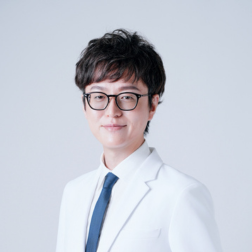
Noriyuki Ishizuka, MD
Director, ARIEL.BUST.CLINIC
Dr. Noriyuki Ishizuka is a board-certified plastic surgeon in Nagoya, Japan, specializing in breast augmentation (including fat transfer) and liposuction. In his articles, he explains the benefits, limitations, and risks of each option from a surgeon’s point of view.
Board-certified plastic surgeon, Japan Society of Plastic and Reconstructive Surgery (JSPRS) / Board-certified aesthetic surgeon, Japan Society of Aesthetic Plastic Surgery (JSAPS)
Make a plan for the first 24 hours after breast augmentation
The adult who stays with you should know the medication schedule, the clinic contact, and the signs that require a call for help.
Consider how long the companion can stay before you book. We generally recommend staying about one week from the day of surgery when possible, which lets our doctor follow you through suture removal.
The appropriate length of stay depends on the procedure and your home country, and you should not shorten your stay without medical guidance.
A same-day booking does not mean you will leave the clinic that day. In one UK audit, 54 of 1,180 day-surgery patients stayed overnight.1 Nausea, pain, and social circumstances were the main reasons.
Some facilities require patients to have an adult accompany them for the first 24 hours after a procedure. Please confirm whether your surgeon has this requirement and inquire about any written instructions you will receive before leaving the facility.
The helper should be available from the time you leave the clinic until the following morning. The helper should be available from the time you leave the clinic until the next morning.
Why anesthesia can affect the early recovery hours
Sedation and local anesthesia are used for certain breast augmentation procedures, and their effects extend beyond the treated area. For several hours after surgery, you may experience drowsiness, slowed reaction times, or temporary unsteadiness.
What same-day discharge assumes
A clinic that releases you the same day checks that your blood pressure is stable, pain and nausea are controlled, and you can stand and walk without help. Being cleared to leave does not mean you are ready to cross a city or make careful decisions alone.
Anesthesia, sedation, and the operation itself can affect judgment, memory, and physical coordination. For that reason, discharge without an escort after general anesthesia or sedation has long been discouraged.
In a 2012 report on 171 breast augmentation and augmentation-mastopexy patients, recovery-room time averaged about 50 minutes.2 Nausea occurred in roughly 1 in 10 patients.
Do not drive on the day of surgery, even if you feel clear-headed. A 2008 report described two patients who left day surgery without an escort and then had car accidents with serious injuries.3
What to confirm before traveling alone for breast augmentation
The primary consideration is whether a friend or family member can accompany you. If you are traveling alone, confirm the clinic’s discharge protocols and after-hours contact details before booking your surgery, not after you arrive.
- The adult who can stay with you for the first 24 to 48 hours
- The clinic’s instructions for same-day discharge
- The clinic’s after-hours contact through email or official LINE
- When to call 119 or the Japan Visitor Hotline
At our clinic, you do not need a professional interpreter. A friend or family member can accompany you during your visit, and all consultations are conducted in English.
Companions need to check their own visa status as well. The rules differ by country and by person, and a Japanese embassy or consulate can confirm them before anyone books flights.
If no companion can travel with you
Some people travel alone for privacy or because a companion cannot take time away. In a survey of 484 U.S. adults, privacy during recovery abroad was a commonly mentioned benefit, while distance from home was a common concern.4
Current anesthesia guidelines have not established clear criteria for identifying patients who can safely be discharged without an escort. Please leave this assessment to your surgeon rather than judging based on how alert you feel.
| Time | What happens | What to arrange alone |
|---|---|---|
| After surgery | You may feel groggy or nauseated in recovery | Ask the clinic who can help you return to the hotel |
| Evening | Pain or nausea can increase as medicines wear off | Keep water, medications, and the clinic contact within reach |
| Overnight | A same-day plan can change if symptoms persist | Know when to call the clinic and when to call 119 |
| Next morning | You may feel better but still less steady | Check in with the clinic before walking far |
Who can help after you return to the hotel
Once you are back at the hotel, the most useful person is still the adult who traveled with you. That person can help you stay hydrated and call for help if something changes.
After surgery, you can reach us by inquiry email or official LINE, and we will respond to your concerns.
Keep the clinic’s written instructions and medication schedule together in one place. When a symptom appears, the helper can check those notes first, then contact the clinic if the answer is unclear.
In one study of 60 plastic surgery patients, 20% said a smartphone-based aftercare guide helped them avoid calling the doctor or emergency services.5
For a medical emergency in Japan, call 119 for an ambulance. The Japan Visitor Hotline is a multilingual phone service open 24 hours a day at 050-3816-2787 and can help English-speaking visitors during an urgent situation.
Consultations at our clinic in Nagoya, Japan, are in English, and you can reach us by email or official LINE before you travel and after surgery. We also provide you with your surgical records.
Frequently asked questions
- Can I manage the first night after breast augmentation alone?
-
No. Plan for an adult to stay with you through the first night, even if the procedure is booked as day surgery. Arrange that person before you travel, and ask the clinic what it expects for discharge.
- Will the clinic provide someone to stay with me after surgery?
-
Our listed aftercare support does not include a personal companion or escort. You arrange the person who stays with you at the hotel, while we remain available after surgery via email and official LINE for questions.
- What should I do if I feel too unwell to leave the clinic?
-
Tell the staff before you leave. Nausea, pain, or another symptom may need more time to settle. Ask us what happens in that case. The team can then tell you what the next step should be.
- Can a friend or family member accompany me without acting as an interpreter?
-
Yes. Interpreters are not required at our clinic, and a friend or family member is welcome to accompany you. Their main role is to help you return to the hotel and stay with you during the early recovery.
References
1. Rae, A. (2016). Reasons for delayed patient discharge following day surgery: a literature review. Nursing Standard, 31(11), 42-51. https://doi.org/10.7748/ns.2016.e10292
2. Colque, A., & Eisemann, M. L. (2012). Breast augmentation and augmentation-mastopexy with local anesthesia and intravenous sedation. Aesthetic Surgery Journal, 32(3), 303-7. https://doi.org/10.1177/1090820X12436601
3. Chung, F., & Assmann, N. (2008). Car accidents after ambulatory surgery in patients without an escort. Anesthesia and Analgesia, 106(3), 817-20, table of contents. https://doi.org/10.1213/ane.0b013e3181609531
4. Hassell, N. E., Bustos, V. P., Elmer, N., Comer, C. D., Manstein, S. M., & Lin, S. J. (2024). Costs Versus Complications: Public Perspectives on International Cosmetic Surgery Tourism. Plastic Surgery, 32(3), 468-475. https://doi.org/10.1177/22925503221134817
5. Noel, W., Bosc, R., Jabbour, S., Kechichian, E., Hersant, B., & Meningaud, J. P. (2017). Smartphone-Based Patient Education in Plastic Surgery. Annals of Plastic Surgery, 79(6), 529-531. https://doi.org/10.1097/SAP.0000000000001241
Jakobsson, J. G. (2019). Recovery and discharge criteria after ambulatory anesthesia: can we improve them?. Current Opinion in Anaesthesiology, 32(6), 698-702. https://doi.org/10.1097/ACO.0000000000000784
Ip, H. Y., & Chung, F. (2009). Escort accompanying discharge after ambulatory surgery: a necessity or a luxury?. Current Opinion in Anaesthesiology, 22(6), 748-54. https://doi.org/10.1097/ACO.0b013e328331d498
Walsh, M. T. (2021). Discharging select patients without an escort after ambulatory anesthesia: identifying return to baseline function. Current Opinion in Anaesthesiology, 34(6), 703-708. https://doi.org/10.1097/ACO.0000000000001051