
If you are planning to travel to Japan for breast augmentation, make sure to arrange your medication handoff before you arrive.
Our clinic offers English consultations, but ask in advance whether you will receive a printed instruction sheet in English. Review all medications thoroughly before your flight.
Written by
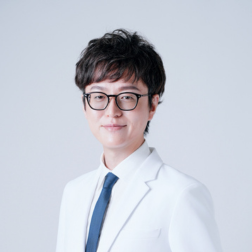
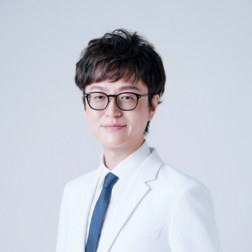
Noriyuki Ishizuka, MD
Director, ARIEL.BUST.CLINIC
Dr. Noriyuki Ishizuka is a board-certified plastic surgeon in Nagoya, Japan, specializing in breast augmentation (including fat transfer) and liposuction. In his articles, he explains the benefits, limitations, and risks of each option from a surgeon’s point of view.
Board-certified plastic surgeon, Japan Society of Plastic and Reconstructive Surgery (JSPRS) / Board-certified aesthetic surgeon, Japan Society of Aesthetic Plastic Surgery (JSAPS)
Plan your breast augmentation medication handoff before you travel
Begin with a written question well in advance of your departure. A survey of 17,543 German patients treated in another country found that 12% of those prescribed medication abroad reported issues with unfamiliar products, dispensing errors, or reimbursement difficulties.1
Ask the clinic if they can prepare your medication instructions in English and who will review them with you before discharge. Make this request before surgery. Inquire how the plan will be explained to you in English.
Confirm the format through the Contact form
Use the contact form to ask a direct question: “Can I receive the medication instructions after my breast augmentation in English?” Clinic staff will tell you what options are available and whether any instructions require a live explanation.
Request a written response before booking your flights and accommodation. Ask for the answer in writing before you book flights and accommodation.
Build the medication review into your departure plan
Bring the question to your pre-surgery consultation as well. Ask the doctor to show you the medication list and go through the timing in English, even if you also receive a printed sheet. This second pass catches details that are easy to miss when several instructions arrive at once.
Ask the clinic to keep a copy in your discharge folder, and take a photo of the list with your phone before you leave. Then you can read it even if the paper is packed in your luggage.
Ask these five things about each medication
Do not settle for just a list of medication names. After breast augmentation, leave with five essential pieces of information in English for each medicine you take.
- The purpose of the medicine
- The dose and the times to take it
- How long to continue it
- What to do after a missed dose
- Symptoms that should prompt a call or message
When a label is written in a language that you do not understand well, the likelihood of confusion increases. A survey conducted in California with 48,968 adults found that individuals with limited English proficiency were more likely to report that prescription labels were difficult to understand.2
A brief English summary for each medication eliminates uncertainty. A person describing the plan can also alter what you receive.
In a survey of 1,590 Spanish-speaking adults with limited English proficiency, having an interpreter was associated with higher odds of receiving instructions on how to take a new medication (adjusted odds ratio 2.50).3 Please request both a live explanation and a written version.
Keep your medication list useful after breast augmentation
A medication list is only useful if your doctor or pharmacist at home can act on it. Request the clinic to write each medicine using its generic name, not just the brand name sold in Japan.
How words are presented is as important as the language used. In a randomized trial involving 202 adults with limited English proficiency, instructions rewritten in the patients’ language with clearer wording improved understanding of how to take the medication.4
Ask for short, plain sentences instead of a copied prescribing screen. Your home pharmacist can use the generic name to compare the medicine with the products available where you live and to check it against your allergies and daily medicines. If you take other medicines at home, bring that list to your pre-surgery consultation. Ask whether any of them should change before surgery.
At home, keep the list where you can show it to a pharmacist or doctor. If a new symptom appears, that record helps a local clinician understand which medicines you are taking and which ones may be relevant.
What to do if your English medication instructions are still unclear
If you are unsure about a dose or timing after leaving the clinic, do not guess. Machine translation can make medication instructions appear clear, but they may be incorrect.
In a 2026 analysis of 316 patient-specific translated sentences, some complete instruction sets had at least one inaccurate segment in various languages.5. Use a machine-translated label as a preliminary reference, not a definitive guide on dosage.
Before you leave, repeat the key points in your own words and ask the clinician to confirm that you understood them correctly. If you have any questions after returning home, please contact the clinic via email or through our official LINE account.
A short message that names the medicine, the dose on the sheet, and the exact concern helps the team answer quickly.
Our clinic in Nagoya, Japan, offers consultations in English, and you can reach us by email or official LINE before you travel and after surgery. We also give you your surgical records.
Frequently asked questions
- Will the clinic give me my medication instructions in English?
-
Ask the clinic to confirm the format before you travel. English consultations are available, and staff can tell you whether they can prepare a written English summary or will review the instructions with you in person before discharge.
- What should I check before I leave the clinic?
-
For each medicine, confirm the purpose, dose, timing, duration, missed-dose plan, and symptoms that should prompt a call. Then repeat the plan in your own words so you can correct any misunderstandings while you are still there.
- Can I use a translation app for my medicine label?
-
Treat a translation app as a back-up, not as the final instruction. Machine translation can look smooth but still give the wrong dose or timing. Confirm those details with the clinic before you leave.
- What if I have a medication question after I return home?
-
Contact the clinic by email or through its official LINE account. Do not change a dose or stop a medicine on your own, because the right next step depends on the medicine and your recovery.
References
1. Panteli, D., Wagner, C., Verheyen, F., & Busse, R. (2015). Continuity of care in the cross-border context: insights from a survey of German patients treated abroad. European Journal of Public Health, 25(4), 557-63. https://doi.org/10.1093/eurpub/cku251
2. Masland, M. C., Kang, S. H., & Ma, Y. (2011). Association between limited English proficiency and understanding prescription labels among five ethnic groups in California. Ethnicity & Health, 16(2), 125-44. https://doi.org/10.1080/13557858.2010.543950
3. Moreno, G., Tarn, D. M., & Morales, L. S. (2009). Impact of interpreters on the receipt of new prescription medication information among Spanish-speaking Latinos. Medical Care, 47(12), 1201-8. https://doi.org/10.1097/MLR.0b013e3181adcc1b
4. Bailey, S. C., Sarkar, U., Chen, A. H., Schillinger, D., & Wolf, M. S. (2012). Evaluation of language concordant, patient-centered drug label instructions. Journal of General Internal Medicine, 27(12), 1707-13. https://doi.org/10.1007/s11606-012-2035-3
5. Kong, M., Fernandez, A., Bains, J., Milisavljevic, A., Brooks, K. C., Shanmugam, A., Avilez, L., Li, J., Honcharov, V., Yang, A., & Khoong, E. C. (2026). Evaluation of the accuracy and safety of machine translation of patient-specific discharge instructions: a comparative analysis. BMJ Quality & Safety, 35(3), 150-158. https://doi.org/10.1136/bmjqs-2024-018384