
If you are planning to travel to Japan for breast augmentation, it’s important to start each scheduling conversation using Japan Standard Time (JST).
Before reaching out, convert two or three clinic time slots to your local date and time to account for potential calendar shifts that may result in a one-day difference.
Written by
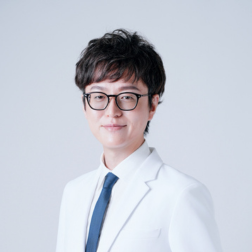
Noriyuki Ishizuka, MD
Director, ARIEL.BUST.CLINIC
Dr. Noriyuki Ishizuka is a board-certified plastic surgeon in Nagoya, Japan, specializing in breast augmentation (including fat transfer) and liposuction. In his articles, he explains the benefits, limitations, and risks of each option from a surgeon’s point of view.
Board-certified plastic surgeon, Japan Society of Plastic and Reconstructive Surgery (JSPRS) / Board-certified aesthetic surgeon, Japan Society of Aesthetic Plastic Surgery (JSAPS)
Start with Japan Standard Time
Japan does not observe daylight saving time, so Japan Standard Time (JST) remains nine hours ahead of Coordinated Universal Time (UTC) year-round. To determine the clinic’s opening hours, first calculate them in JST, and then convert each option to your local time.
The day may change more than the hour. When it is 9:00 a.m. in Japan, it is 2:00 p.m. on the previous day in Hawaii.
Adjust for daylight saving time before booking a breast augmentation consultation
As Japan discontinued daylight saving time in 1952, the only clock that shifts is yours if your country observes it. Recalculate the gap for your appointment dates instead of reusing a number from another season.
For example, France is one hour ahead of Coordinated Universal Time on standard time. When France moves to daylight saving time, the difference with Japan changes by one hour. The same kind of shift can affect other regions that adjust their clocks.
Match the message to the method
Timing issues can be resolved when immediate responses are unnecessary. You can contact us before your trip via inquiry email or our official LINE account. Please ask questions in writing, and our staff will respond during Japan’s daytime hours.
Use written messages for non-urgent points
Written communication is best for inquiries regarding documents, treatment history, and any issues that can wait until our next opening day. If you send your message in the evening, it will typically be received during our morning hours, which can reduce your wait time.
A systematic review of telemedicine in plastic surgery reported 83.9% satisfaction and an average reduction of 120 minutes in travel time.1 Remote contact differs from in-person visits, but the time savings are important when coordinating care from another country.
Ask whether a video call is available
Our public information provides an inquiry email and an official LINE account, but it does not mention whether video consultations are available. Please check with us to see if a live video format is an option before scheduling your appointment.
Cross-border remote consultation in Japan has become more common, although support arrangements and shared legal frameworks are still limited.
Video can save time, but a randomized trial of 31 plastic surgery patients found lower satisfaction with clinician communication than with face-to-face visits.2
Map Japan clinic hours to your local clock
We are open from 10:00 AM to 7:00 PM Japan time, with the last appointment at 6:00 PM. There are no fixed closing days, and opening days can vary. Please confirm the date with us even while you are comparing times.
Compare two clinic times first
Use standard time for these four examples. If your country is currently observing daylight saving time, adjust the result by one hour.
| Location | 10:00 JST | 19:00 JST |
|---|---|---|
| China (UTC +8) | 09:00 same day | 18:00 same day |
| India (UTC +5:30) | 06:30 same day | 15:30 same day |
| France (UTC +1) | 02:00 same day | 11:00 same day |
| Hawaii (UTC -10) | 15:00 previous day | 00:00 same day |
The last appointment starts at 18:00 JST. Use that as your latest start even though the office window can extend to 19:00.
For a very large difference, a comfortable morning for you may be late in Japan, or a Japan daytime slot may fall in the middle of your night. Pick two or three slots where you are awake and the clinic is open, then send those rather than asking for an impossible overlap.
A 2025 report described 15 patients who planned surgery remotely with three-dimensional images, first met the plastic surgeon the day before surgery, and had procedures go as planned.3
This arrangement is not merely a simple photo or message exchange; it indicates that some distance planning can occur before arrival.
Send three usable breast augmentation appointment options
Please provide three complete options instead of asking our staff to convert them. Let us know which one best fits my schedule.
- The consultation date in Japan and the date where you live, if they differ.
- The start time in both JST and your local time, with a.m. or p.m. marked clearly.
- A short note on the documents or photos attached to that message.
Including both dates avoids a one-day error when appointments cross midnight in your country.
Keep a written trail before you travel
Once a time is agreed, confirm it in writing one more time. A short message with the JST time, your local time, and the date helps both sides catch a mismatch before you travel.
Live video meetings benefit from early scheduling because two countries and two devices are involved. One international epilepsy telemedicine collaboration scheduled video meetings two to three weeks ahead and checked the connection the day before.4
If a reply feels unclear, ask again in writing. The answer stays on your screen for later reference.
Consultations at our clinic in Nagoya, Japan, are in English, and you can reach us by email or official LINE before you travel and after surgery. We also provide you with your surgical records.
Frequently asked questions
- Do I need to call the clinic during Japan’s daytime?
-
You do not have to call. You can send your questions by inquiry email or official LINE, and we can reply during our opening hours. If you do want a live conversation, ask which format is available and confirm the time in JST and your local time.
- What changes when my country is on daylight saving time?
-
The time difference may be one hour smaller because Japan does not use daylight saving time. Recalculate the offset for your appointment date instead of using a time you converted during another season.
- Should I send my local time or Japan time?
-
Send both. Include the date and start time in JST, then add the date and start time in your local time. When the two dates differ, showing both prevents a one-day booking mistake.
- Is a video consultation required before I travel?
-
Our public information does not list a required video consultation. Ask us whether a video call is available or whether email and official LINE are enough for your pre-travel questions.
References
1. Mehdizadeh, M., Zhang, F. W., Yu, L. C., Li, J. H., Posso, A. N., Mustoe, A. K., Escobar-Domingo, M. J., Foppiani, J., Karinja, S., & Lee, B. T. (2026). Telemedicine in Plastic Surgery: A Systematic Review and Meta-analysis of Utilization and Outcomes Pre- and Post-pandemic. Aesthetic Plastic Surgery, 50(13), 5712-5720. https://doi.org/10.1007/s00266-026-05879-z
2. Westra, I., & Niessen, F. B. (2015). Implementing Real-Time Video Consultation in Plastic Surgery. Aesthetic Plastic Surgery, 39(5), 783-90. https://doi.org/10.1007/s00266-015-0526-4
3. Barbon, C., Hedén, P., & Otte, M. (2025). Pushing Boundaries in Aesthetic Breast Surgery: Precise Surgical Planning With Online Consultation and 3-dimensional Simulation. Plastic and Reconstructive Surgery Global Open, 13(11), e7203. https://doi.org/10.1097/GOX.0000000000007203
4. Ahmed, S. N., Mann, C., Siddiqui, F., Sheerani, M., Syed, N. A., Snyder, T., Enam, S. A., & Boling, W. (2009). Experiences from an international tele-epilepsy collaboration. The Canadian Journal of Neurological Sciences Le Journal Canadien Des Sciences Neurologiques, 36(5), 582-6. https://doi.org/10.1017/s0317167100008076
Yan, Y., & Naito, T. (2025). Policies and Practices of Cross-border Teleconsultation in Japan. Juntendo Medical Journal, 71(6), 385-388. https://doi.org/10.14789/ejmj.JMJ25-0016-P