
If you are considering breast augmentation and comparing options in Japan and Thailand, it’s important to focus on practical details: who will perform the procedure, where you will recover, and who will handle any potential complications.
Thailand attracts many medical travelers for various types of care, but existing research does not specifically compare breast augmentation between the two countries.
A more effective strategy is to evaluate each clinic by asking the same set of written questions before you make any travel arrangements.
Written by
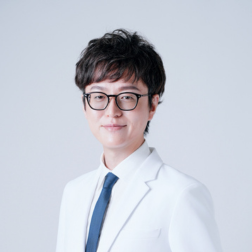
Noriyuki Ishizuka, MD
Director, ARIEL.BUST.CLINIC
Dr. Noriyuki Ishizuka is a board-certified plastic surgeon in Nagoya, Japan, specializing in breast augmentation (including fat transfer) and liposuction. In his articles, he explains the benefits, limitations, and risks of each option from a surgeon’s point of view.
Board-certified plastic surgeon, Japan Society of Plastic and Reconstructive Surgery (JSPRS) / Board-certified aesthetic surgeon, Japan Society of Aesthetic Plastic Surgery (JSAPS)
Start with what breast augmentation research can compare
Research on breast augmentation conducted abroad provides a checklist of options, but it does not indicate which destination yields the best results.
No study creates a country ranking
Countries define medical tourism differently, and their reporting practices vary. Some studies focus on individuals who have already traveled for medical treatment, while others look at those considering it.
This discrepancy means that general travel trends cannot reliably predict the results of your medical procedure.
Complication reports point to follow-up, not nationality
Complication data still provides a valuable filter. A 2023 systematic review of 44 studies involving 589 people found that infection was the most common complication after aesthetic surgery abroad, followed by wound opening.1
An earlier 2018 review of 17 observational studies on cosmetic tourism for breast augmentation reported infection, wound opening, and dissatisfaction with the result.2 Since these findings do not highlight a specific country, compare how each clinic would address a problem.
Match the procedure size before comparing destinations
The recovery plan varies based on whether you are getting an implant, a fat transfer, or a combination of both, as well as how much fat the surgeon removes. Finalize the procedure plan first, as the number of recovery days before flying depends on that choice.
Not every medical traveler is having surgery
Medical travel to Thailand includes a wide range of services beyond just breast augmentation. Patient volume is not a reliable signal. In a cross-sectional study of five private Thai hospitals, 34% of medical travelers’ visits were for health checks, consultations, or similar simple care.3
A study of more than 4,000 patient records from five large private Thai hospitals found that 60% of UK medical travelers received relatively minor elective procedures.4 Some visitors were not primarily traveling for medical treatment.
Surveys about choosing Thailand often highlight its reputation and lower costs, but these responses encompass various types of care. In a 2024-2025 survey of 466 travelers at a Thai airport, 20.2% said they would consider treatment in Thailand, and medical reputation and lower cost were common reasons.5
It indicates what travelers consider when making a choice, not what a particular surgical team will provide for you.
Use the same comparison grid for each candidate
Complete one grid for each clinic, so you can weigh responses rather than rely solely on impressions.
| Point to compare | What to confirm | Why it matters |
|---|---|---|
| Procedure plan | Whether an implant, fat transfer, or hybrid fits your body | Recovery and travel days change with the method |
| Surgical facility | Where the operation is performed and who can handle an emergency | This affects the first hours after surgery |
| Surgeon and anesthesia | Which doctor operates and who monitors anesthesia | Different skills shape risk and communication |
| Language and consent | How the plan, risks, and instructions are explained in a language you understand | This affects whether your decision is informed |
| Records and follow-up | What records you receive and how you contact the team afterward | Home-country doctors may need this information |
Check the surgical team and recovery setting
Once the procedure plan is clear, compare who will be in the operating room to those who will see you the next day. A clinic’s location is less important than its team, facility, and plan for complications.
Ask who operates and who provides anesthesia
Ask about the surgeon’s formal qualifications and confirm that the same doctor who plans the operation will also perform it. Also ask who will provide anesthesia and how they will monitor you during the procedure.
Reports describe patients who booked travel and paid for surgery without first meeting the operating surgeon, leaving important questions unanswered.
Look closely at language and informed consent
An international hospital does not guarantee that all providers communicate in the same way. A qualitative study at a Thai international hospital found tensions, even though the facility frequently admitted foreign patients.
You should have the consent discussion, understand the size and incision plan, and receive aftercare instructions in a language you are comfortable with. Ask how the clinic provides language support, and request written details of the key aftercare steps before you make any payments.
Compare travel, records, and follow-up for breast augmentation
Include the return flight in the surgical plan from the beginning. Consider how many nights you will stay, what documents you will bring back, and how you can contact the team after your departure.
Plan the stay around the operation, not the ticket
In my practice, I recommend allowing about one week for recovery after surgery. This timeframe helps me monitor your healing process, particularly during suture removal when feasible.
If you can’t stay for a week, you may be able to schedule a silicone breast augmentation or a hybrid procedure that includes a small amount of liposuction over two or three days, as long as the sutures can be removed at home. Please note that this is my personal guideline and not a guarantee.
Long-haul flights and extensive liposuction can alter your recovery. In these cases, staying for suture removal allows me more time to monitor your progress before flying.
Compare records and the path for a problem
Before making any payment, request the surgical record and a detailed aftercare summary. Also ask who to contact if you develop new swelling or pain after returning home. Many patients mistakenly assume the public system will automatically provide revision care, but it won’t.
Put the same questions to every candidate
After narrowing your list, send the same questions to each clinic. Clear answers are easy to compare side by side, and you can follow up on vague responses before deciding.
Send at least four questions and request written answers instead of a phone summary.
- Who will perform the surgery, and what is their formal surgical qualification?
- Who provides anesthesia, and how will I be monitored?
- Which part of the recovery must I complete before flying home?
- What records will I receive, and how do I contact the team after I leave?
Our clinic in Nagoya, Japan offers consultations in English. You can contact us via email or official LINE before traveling and after your surgery, and we will provide your surgical records.
Frequently asked questions
- Does research show that one country is safer for breast augmentation?
-
No. The studies describe experiences and complications without ranking countries. Compare the surgical team, language, records, and follow-up plans at each clinic instead of relying on a country’s general reputation.
- Can I arrange the consultation and aftercare in English before traveling?
-
At our clinic, you can have consultations in English, and you can reach us by email or through our official LINE account before your visit. When comparing clinics, ask whether the same doctor who plans your operation will explain the risks and obtain consent in a language you understand.
- How long should I plan to stay in Japan after breast augmentation?
-
Patients are typically advised to stay for about one week after surgery to allow for suture removal when possible. If a one-week stay isn’t feasible, a two- to three-day stay may be sufficient for procedures like silicone breast augmentation or minimal liposuction, provided that sutures can be removed at home.
However, for longer flights or larger-volume liposuction, a full week is typically more appropriate. Please keep in mind that this is a personal guideline and not a guarantee, as recovery can vary from person to person.
- Will doctors in my home country fix a complication from surgery abroad?
-
Not always. A public health system may address urgent medical issues but might not cover elective revision surgery. Before you travel, consult a local doctor to understand what aftercare is available, and check with your travel insurance provider about coverage.
Also ask each clinic about the medical records and support contacts they will provide after you return home.
References
1. Alkaelani, M. T., Koussayer, B., Blount, T., Amawi, Y. A., Mahboob, O., Le, N. K., Parus, A., & Troy, J. (2023). Complications of Medical Tourism in Aesthetic Surgery: A Systematic Review. Annals of Plastic Surgery, 91(6), 668-673. https://doi.org/10.1097/SAP.0000000000003683
2. Brightman, L., Ng, S., Ahern, S., Cooter, R., & Hopper, I. (2018). Cosmetic tourism for breast augmentation: a systematic review. ANZ Journal of Surgery, 88(9), 842-847. https://doi.org/10.1111/ans.14326
3. Noree, T., Hanefeld, J., & Smith, R. (2016). Medical tourism in Thailand: a cross-sectional study. Bulletin of the World Health Organization, 94(1), 30-6. https://doi.org/10.2471/BLT.14.152165
4. Noree, T., Hanefeld, J., & Smith, R. (2014). UK medical tourists in Thailand: they are not who you think they are. Globalization and Health, 10, 29. https://doi.org/10.1186/1744-8603-10-29
5. Polpitakchai, C., Kiratipaisarl, W., Yamsiri, R., Flaherty, G. T., & Kitro, A. (2026). Needs, attitudes, and factors influencing medical tourism in Thailand. Preventive Medicine Reports, 66, 103469. https://doi.org/10.1016/j.pmedr.2026.103469
Whittaker, A., & Chee, H. L. (2015). Perceptions of an ‘international hospital’ in Thailand by medical travel patients: cross-cultural tensions in a transnational space. Social Science & Medicine, 124, 290-7. https://doi.org/10.1016/j.socscimed.2014.10.002